Equipment catalog / Specifications

    Complete Technical Specifications

    Full dimensional, electrical, RF, environmental, and compliance data for every device in the safely.living equipment catalog — CSI MasterFormat Section 27 52 23, ready for construction specifications and ARCAT listing.

    01 — Section 27 52 23, Part 2

    Call for Aid Buttons

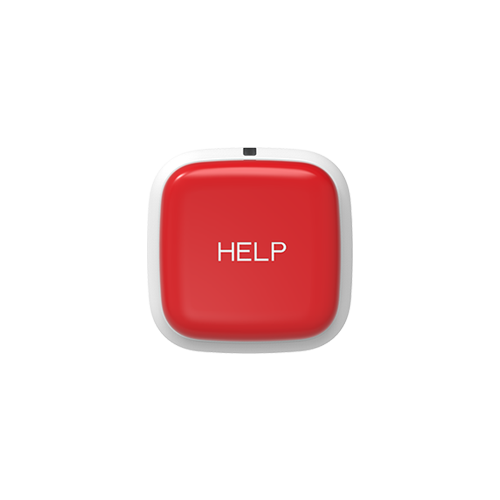
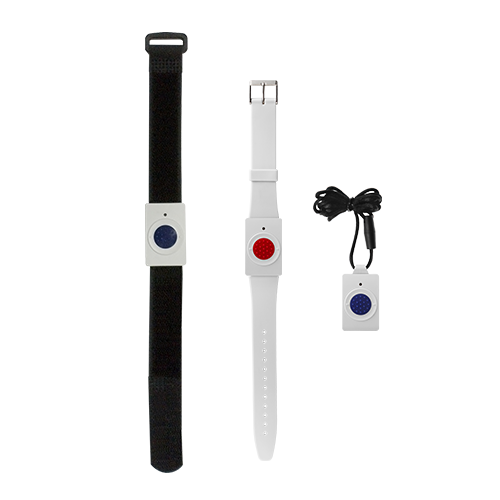
    PB-23 — Wireless call for aid button

    PB-23

    Wireless call for aid button

    Single-press wireless call for aid button for critical situations such as a fall, medical event, or intrusion.

    Dimensions85 × 85 × 22 mm
    RF frequency433 / 868 / 869 MHz
    Power3V CR123 lithium, user-replaceable
    Battery life10 years
    Waterproof / IP ratingIPX6
    Operating temperature-10°C to 45°C (14°F to 113°F)
    Operating humidityUp to 85% non-condensing
    PB-15 Series — Call for aid button series

    PB-15 Series

    Call for aid button series

    Wireless call for aid button family that lets residents and staff press for help in emergency situations from anywhere in coverage.

    Dimensions74 × 46 × 22 mm
    Power3V lithium, user-replaceable
    Waterproof / IP ratingIP44
    Operating temperature-10°C to 45°C
    Operating humidityUp to 85% non-condensing

    02 — Section 27 52 23, Part 2

    Emergency Pendants & Wrist Transmitters

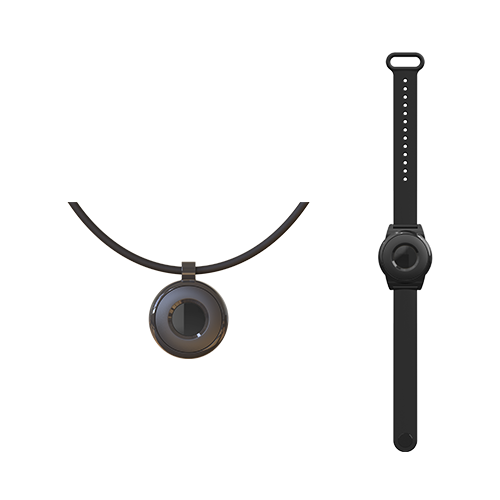
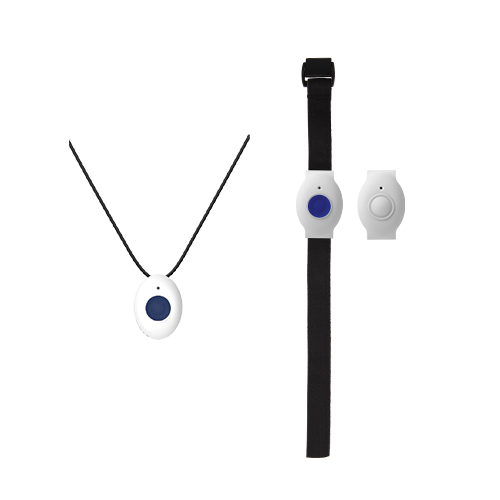
    WTRSC-1 — One-Click emergency pendant

    WTRSC-1 (Climax model WTRSE)

    One-Click emergency pendant

    Modern-looking emergency pendant with a patented One-Click design, letting residents switch between necklace and wristband wear without tools. Adjustable alarm-button pressure sensitivity (Light/Medium/Hard), remote-configurable, for residents with limited hand dexterity.

    Dimensions38.5 × 38.5 × 14 mm
    RF frequency869 / 919 MHz
    Power3V CR2032 lithium
    Battery life8 years
    Waterproof / IP ratingIP67
    Operating temperature-10°C to 45°C
    Operating humidityUp to 85% non-condensing
    BR1-WTRSB — Bluetooth emergency pendant

    BR1-WTRSB

    Bluetooth emergency pendant

    Small wireless call for aid button that pairs with a smartphone app so residents can summon help while away from the building.

    PowerRechargeable, low-battery alert
    Waterproof / IP ratingIP57
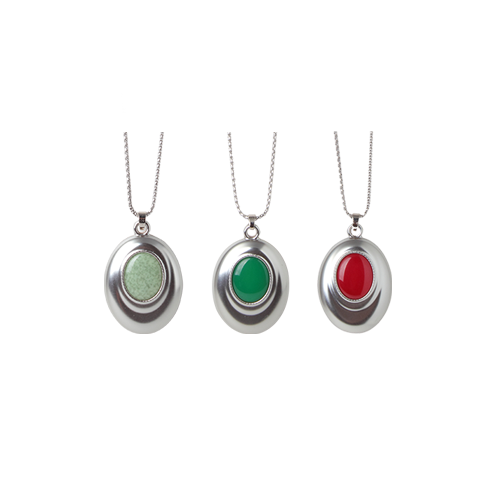
    JLPD-1 — Jewelry pendant collection

    JLPD-1

    Jewelry pendant collection

    Stylish jewelry-grade housing over a durable emergency pendant, for residents who won't wear an obviously medical device. Silver-plated frame with stone-like setting; Burgundy, Red, Jade, Green, and Marble finishes.

    DimensionsØ32 × 47 × 12 mm
    RF frequency868 / 433 / 869 MHz
    Power3V CR2032 lithium
    Battery life10+ years
    Waterproof / IP ratingIP68
    Operating temperature-10°C to 45°C
    Operating humidityUp to 85% non-condensing
    WTRZ — Ergonomic wearable button

    WTRZ

    Ergonomic wearable button

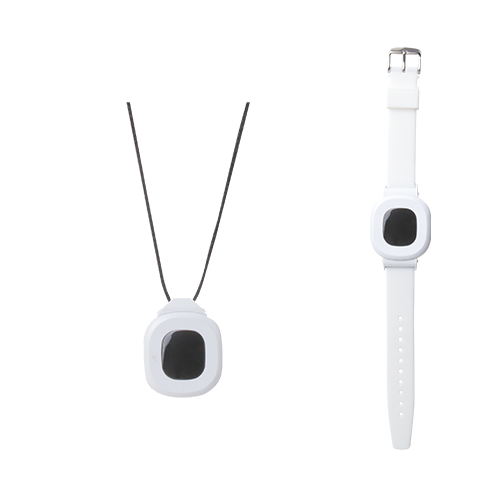
    Ergonomically designed wearable emergency button built for comfort and all-day wear without bulk.

    Dimensions48 × 36 × 14 mm
    Operating temperature-10°C to 45°C
    Operating humidity0–85%
    WTRQ3 — Compact call transmitter

    WTRQ3

    Compact call transmitter

    Compact pendant/wrist transmitter that lets residents summon help with one simple press.

    Dimensions39 × 25 × 11 mm
    Power3V CR2032, 4–10 yr life by frequency band
    Waterproof / IP ratingIPX8
    Operating temperature0°C to 45°C
    Operating humidityUp to 85%

    03 — Section 27 52 23, Part 2

    Repeaters & Range Extenders

    RP-29 Series — Advanced SF1/F1 repeater

    RP-29 Series

    Advanced SF1/F1 repeater

    Advanced repeater that boosts the range between gateway and sensors with SF1/F1 technology, including PIR camera compatibility.

    Dimensions186 × 130 × 30 mm
    Power12V/1A adapter with rechargeable Ni-MH battery backup
    Operating temperature-10°C to 45°C
    Operating humidity0–85% non-condensing

    04 — Section 27 52 23, Part 2

    Base Stations, Gateways & Receivers

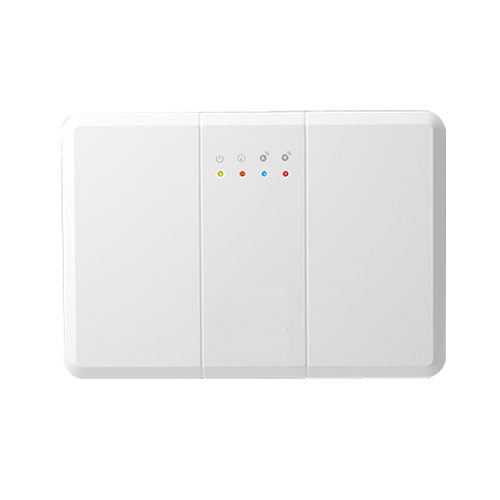
    PWSR-5-LT — Office receiver / gateway

    PWSR-5-LT

    Office receiver / gateway

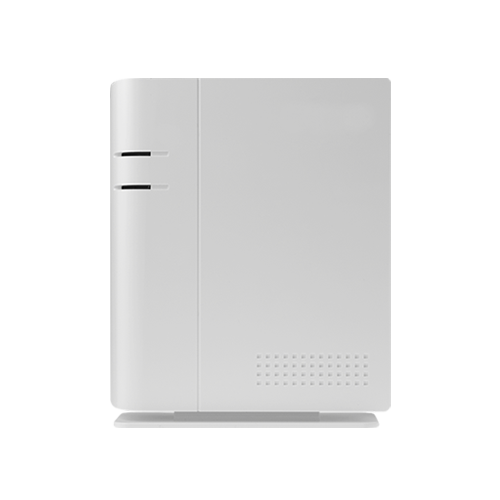
    Wall-mounted office receiver that gathers signals from pendants, call for aid buttons, and pull cords across the property and hands every event to the care center, with LED status indicators for power, signal, and alarm state.

    Dimensions~155 × 105 × 26 mm (local-power variant of the shared receiver chassis)
    RF frequency869 MHz
    Power9V/1A local adapter
    Operating temperature0°C to 45°C
    Operating humidityUp to 85% non-condensing
    GX-MAX Series — VoIP smart care alarm

    GX-MAX Series (Climax model CTC-1052-QT-DT35A/B)

    VoIP smart care alarm

    All-in-one telecare base station with VoLTE/VoIP two-way voice, Bluetooth health-device pairing, and support for up to 20 integrated devices/sensors including wrist transmitters, pendants, fall/PIR/smoke/water-leak/CO sensors, and panic buttons; medication-dispenser compatible.

    DimensionsDT35A: 156 × 156 × 47 mm · DT35B: 173 × 172.8 × 49 mm (external antenna)
    Power12V/1A adapter (DT35B: 100–240V universal input)
    Battery life7.2V Ni-MH backup, 24–28 hr runtime
    Operating temperature-10°C to 45°C
    Operating humidityUp to 85% non-condensing
    CertificationsAT&T / Verizon / T-Mobile approved (VoLTE)
    CSI Section 27 52 23 — Nurse Call / Resident Emergency Call and Monitoring System

    Part 1 — General

    The section covers wireless fixed and portable call-for-aid buttons, wearable pendant and wrist transmitters, RF repeaters, property-office base stations and receivers, and connection to a 24-hour, live-attended, UL-listed care center. References include UL 1637, UL 827, FCC Part 15, ICC A117.1 / ADA operable parts (Section 309), HUD NSPIRE (24 CFR Part 5, Subpart G), and NFPA 72 for coordination. Submittals: product data, device location shop drawings, an RF site survey, warranty, and monitoring center documentation. The manufacturer must have at least ten years in wireless life-safety and telecare hardware; the monitoring provider must be staffed 24/7/365 by live operators.

    Part 2 — Products

    Basis of design is Climax Technology Co., Ltd., furnished, installed, and monitored under the safely.living program. Every wireless device sends a supervised check-in signal, with missing-device and low-battery reporting to the care center. Fixed buttons meet the 5 lbf maximum operating force and reach-range rules. Device-by-device data for buttons, wearables, repeaters, and base stations is listed in the tables above.

    Part 3 — Execution

    Verify RF coverage by site survey against as-built wall construction, corridor length, and wing layout before final device and repeater placement. Install fixed call buttons at the locations on the drawings (typically bathrooms, bedrooms, common areas, staff stations) at ADA/ICC A117.1 mounting heights; one base station per building at the property office or another staffed location; and one wearable per resident, programmed and tested at move-in. Test every device for supervised-signal receipt and escalation to the care center, spot-check low-battery and tamper reporting on at least 10 percent of devices, and train property staff before Substantial Completion.

    Download the complete CSI 3-part specification (PDF) →
    Compliance note

    HUD NSPIRE requires that installed call-for-aid systems let residents notify someone when they need help, and that those systems stay accessible and working. This system is supervised and monitored 24/7 by live operators. It is not a substitute for a required fire alarm system under NFPA 72.

    Writing us into a project spec?

    Get a free Property Risk & Opportunity Report — we'll map the device mix, coverage gaps, and the HUD rent-adjustment funding path for your property.

    success@safely.living · +1 (816) 644-6968